English
 中文简体
中文简体 Español
 عربى
عربى


Product Consultation
Your email address will not be published. Required fields are marked *

 EN
EN

Content
To paint a steel door, clean the surface with a degreaser, sand lightly with 120 to 220 grit sandpaper to create adhesion, apply a rust-inhibiting metal primer, and finish with an exterior acrylic latex or oil-based alkyd enamel paint applied in two thin coats. The best paint for a steel door is a 100% acrylic latex exterior paint with a satin or semi-gloss sheen for most residential exterior steel doors, or a direct-to-metal (DTM) enamel for commercial steel doors requiring greater durability and chemical resistance. For interior steel doors in commercial and industrial settings, a two-part epoxy or polyurethane coating delivers the longest service life. A steel door outperforms wood and fiberglass alternatives in security, fire resistance, and long-term structural integrity, making it the dominant choice across commercial steel doors, steel exterior doors, and industrial steel doors categories. This guide covers every practical aspect of painting and selecting steel doors with specific products, specifications, and decision criteria.
Choosing the right paint before starting any work is the most important decision in the entire steel door painting process. The wrong paint on a steel door peels within months, fails to adhere to the metal substrate, or offers no rust inhibition, causing the steel beneath to corrode from below the paint film. The right paint, properly applied, lasts 5 to 10 years on an exterior steel door before refinishing is needed.
100% acrylic latex exterior paint is the most widely recommended paint for residential steel exterior doors because it combines UV resistance, flexibility during thermal expansion and contraction of the metal, water resistance, and color retention in a product available at every paint retailer. Steel doors on residential homes expand and contract significantly between seasons (a steel door panel can move approximately 1 to 3 mm across its width between summer and winter temperatures), and acrylic latex's flexibility accommodates this movement without cracking or flaking the way rigid oil-based paints may over time.
Recommended sheen levels for steel exterior doors:
Oil-based alkyd enamel cures to a harder film than acrylic latex and is more resistant to scuffing, chipping, and scratching from daily physical contact. It is the preferred choice for high-traffic entry doors in residential applications (the main front door of a house used multiple times daily by a large household) and for steel exterior doors that receive frequent impact or abrasion. Alkyd enamel takes longer to dry (8 to 24 hours between coats versus 2 to 4 hours for acrylic), has stronger solvent fumes requiring ventilation, and yellows slightly over time in indoor or shaded applications. For exteriors with good sun exposure, yellowing is not a practical concern.
Direct-to-metal (DTM) paints are specifically formulated to adhere directly to properly prepared bare metal surfaces without a separate primer coat. They contain built-in corrosion inhibitors (typically zinc phosphate or zinc oxide-based) that actively prevent rust formation at the metal surface rather than just covering it. DTM paints are the standard in commercial steel doors and industrial steel doors painting programs because they simplify the coating system (one product instead of two) while meeting the higher durability requirements of commercial environments.
Leading DTM products for steel doors include Sherwin-Williams DTM Acrylic Coating, Benjamin Moore Insl-X XT-7000, and Rust-Oleum Professional DTM Enamel. These products are typically applied in two coats to a properly degreased and abraded steel surface, achieving dry film thicknesses of 3 to 4 mils (75 to 100 micrometers) per coat.
For industrial steel doors in manufacturing plants, warehouses, chemical facilities, and food production environments, two-part (2K) coating systems provide performance that single-component paints cannot match:
| Paint Type | Primer Needed? | Dry Time Between Coats | Expected Life (exterior) | Best Application |
|---|---|---|---|---|
| Acrylic latex exterior | Yes (metal primer) | 2 to 4 hours | 5 to 8 years | Residential steel exterior doors |
| Oil-based alkyd enamel | Yes (metal primer) | 8 to 24 hours | 6 to 10 years | High-traffic residential entry |
| Direct-to-metal (DTM) | No (built-in) | 4 to 6 hours | 7 to 12 years | Commercial steel doors |
| Two-part epoxy + polyurethane | No (epoxy is primer) | 8 to 16 hours | 12 to 20 years | Industrial steel doors |
| Powder coat (factory) | Integral to process | Factory cure at 180 to 200°C | 15 to 25 years | New commercial and industrial doors |
The success of painting a steel door depends more on surface preparation than on paint selection. A premium paint applied to a poorly prepared steel surface will fail within one to two years. Proper preparation takes more time than the painting itself but determines whether the finished result lasts years or fails within months.
Remove the door handle, lock set, knocker, house numbers, and any other hardware that can be detached. For hardware that cannot be removed (hinges, for example), apply painter's tape carefully to all surfaces that should not be painted. Apply painter's tape to the door frame on all four sides and to any glass panels or sidelights. Place a drop cloth on the threshold and floor below the door. If painting the door while it is hung rather than removed, prop the door slightly open to allow you to paint the door edges and to prevent the door from sealing shut while the paint is wet.
The steel surface must be completely free of grease, oil, wax, and dirt before any sanding or priming begins. Any contaminant left on the surface will prevent adhesion and cause the paint to peel or fish-eye (form small craters in the wet paint surface). Use a commercial degreaser or a solution of TSP cleaner in warm water, scrubbing with a stiff-bristle brush or abrasive pad. Pay particular attention to the door handle area (where hand oils accumulate), the bottom edge (where road grime and salt splash may have penetrated), and any areas with visible staining or discoloration.
Rinse thoroughly with clean water and allow the door to dry completely. Residual moisture under the primer causes blistering; the door should feel dry to the touch and show no moisture when checked with a moisture meter before painting proceeds.
Inspect the steel door surface carefully after cleaning. Two types of surface defects require attention before priming:
Even on a door with no visible rust or damage, the entire surface must be sanded lightly to create a mechanical adhesion profile for the primer. Sand with 120 grit sandpaper in the direction of any existing paint grain (typically horizontal or vertical, not circular) using moderate pressure. The goal is to dull the surface and scratch it microscopically so the primer has something to grip, not to remove paint down to bare metal. After sanding, wipe the entire door surface with a tack cloth or a slightly damp cloth to remove all sanding dust. Sanding dust left on the surface creates a fine particulate contamination under the primer that weakens adhesion and causes a rough finish texture.
Primer is not optional on a steel door. Even if using a DTM paint, applying a separate rust-inhibiting primer to bare steel or previously rusted areas provides an additional layer of corrosion protection that extends the paint system's life. For a standard residential steel exterior door painting project:
Two thin coats always produce a better result than one thick coat on a steel door. A thick single coat is prone to drips on the vertical surface, takes much longer to dry fully, and creates a film that is more likely to wrinkle or crack as the outer surface skins over before the inner portion has cured. Two thin coats build an even film with better adhesion between layers and better durability.
The correct sequence for applying paint to a steel door (panel or molded design):
Painting an exterior steel door introduces additional constraints from weather conditions that do not apply to interior painting. The ambient temperature, relative humidity, direct sunlight, and wind all affect how the paint flows, dries, and cures, and getting these conditions wrong results in paint failures that require the entire job to be redone.
Painting an exterior steel door while it remains hung on its hinges is practical and adequate for most homeowner situations. The advantages are that no door removal is required, the door can be partially open during painting to allow access to both faces, and the risk of damaging the door during removal and re-hanging is avoided. The disadvantage is that painting the door edges and the lower face of the door is more awkward, and the horizontal surfaces (top edge, bottom edge) are difficult to reach with a roller.
Removing the door from its hinges and laying it flat on sawhorses is the preferred method for achieving the highest-quality finish. Horizontal painting eliminates the risk of runs and drips entirely, allows both faces and all edges to be painted systematically, and allows the painter to work more comfortably and thoroughly. It is strongly recommended for high-gloss finishes or for any commercial steel door refinishing where finish quality is a priority.
A steel door is a door unit in which the primary structural component is a steel face sheet or steel frame, as distinct from wood, aluminum, or fiberglass doors. Steel doors are manufactured in several categories that differ significantly in construction, performance specifications, regulatory compliance requirements, and appropriate applications.
Residential steel exterior doors (also called entry doors) are constructed from 24-gauge to 20-gauge steel sheet over a wood or composite internal frame, typically with a polyurethane foam insulation core providing an insulating value of approximately R-5 to R-15. The steel facing is often embossed with a simulated wood grain texture to soften the industrial appearance of bare steel and allow the door to fit residential architectural contexts. Standard residential steel exterior door sizes are 32 × 80 inches and 36 × 80 inches in the US, with European standard heights of 2,000 mm and 2,100 mm.
The advantages of steel over wood for residential exterior doors are significant: steel does not warp, crack, split, or swell with moisture changes; it provides substantially better security against forced entry; it is dimensionally stable in extreme temperatures; and it is significantly less expensive than equivalent-quality solid wood exterior doors. The primary disadvantage is thermal bridging: the steel face sheet conducts heat and cold, making the door cold to the touch in winter and creating potential condensation issues without proper insulation design.
Commercial steel doors are built to substantially more demanding specifications than residential exterior doors. They are constructed from heavier gauge steel (typically 18-gauge, 16-gauge, or 14-gauge) in a full-flush or inverted channel design, often filled with steel or mineral fiber reinforcement rather than foam alone, and manufactured to the standards of the Steel Door Institute (SDI) and ANSI/SDI A250.
SDI classifies commercial steel doors into four levels by gauge and performance:
A large proportion of commercial steel doors are also fire-rated, meaning they have been tested by an independent testing laboratory (typically Underwriters Laboratories, UL, in North America) and certified to resist fire for a specified period. Fire ratings for steel doors are expressed in minutes and correlate to specific opening protection classifications:
Industrial steel doors are specified for environments where standard commercial steel door construction is insufficient: manufacturing plants, warehouses, cold storage facilities, data centers, vehicle access points, and facilities handling hazardous materials. The defining characteristic of industrial steel door specifications is that they address performance parameters beyond the structural and fire ratings of standard commercial doors:
The best steel doors for home applications balance security rating, thermal performance, weatherstripping quality, aesthetic options, and price. A homeowner selecting a new steel exterior door for the primary entry should evaluate the following criteria systematically rather than making the decision based primarily on price or visual appearance.
Security is the primary reason most homeowners choose steel over wood or fiberglass. The steel face sheet gauge, the quality of the door frame, and the specification of the lock reinforcement determine how much physical resistance the installed door assembly provides against forced entry. Key security specifications:
The energy performance of a steel exterior door is determined by three factors: the insulation value of the door core, the thermal break in the frame, and the quality of the weatherstripping system. For the best steel doors for home energy performance:
Steel exterior doors for residential use are available in a wide range of panel configurations (smooth, woodgrain, raised panel, craftsman, and contemporary flat panel designs), glass insert options, and factory finish colors. Factory finishes on the best residential steel doors are polyester or polyurethane powder coat applied in controlled factory conditions, providing significantly better adhesion, film build, and durability than field-applied paint. A quality factory finish on a steel door is warranted by the manufacturer for 1 to 5 years against peeling, chipping, and fading. Field painting after installation voids most factory finish warranties.
| Door Type | Typical Gauge | Fire Rating Available | Key Performance Feature | Typical Application |
|---|---|---|---|---|
| Residential steel exterior door | 24 to 20 gauge | Limited (20 min. only) | Security and insulation | Home entry, garage access |
| Commercial steel doors (Level II) | 18 gauge | Yes (20 to 90 min.) | Heavy duty, cycle rated | Office, school, healthcare |
| Commercial steel doors (Level III) | 16 gauge | Yes (up to 3-hour) | Extra heavy duty, institutional | Transit hubs, universities |
| Industrial steel doors | 14 gauge and heavier | Yes (specialized ratings) | Impact, thermal, or chemical resistance | Factories, cold storage, hazmat |
The best paint for a residential steel exterior door is a 100% acrylic latex exterior paint in satin or semi-gloss sheen, applied over a rust-inhibiting metal primer. For commercial steel doors, a direct-to-metal (DTM) acrylic or alkyd paint provides better durability and corrosion resistance without requiring a separate primer. For industrial steel doors in demanding environments, a two-part epoxy primer plus polyurethane topcoat system delivers the longest service life. Avoid interior latex paint, general-purpose paint not formulated for metal, or paint without UV inhibitors on exterior steel doors.
Yes, priming is necessary in almost all steel door painting situations. A rust-inhibiting metal primer provides adhesion between the steel substrate and the finish paint and actively suppresses corrosion at the metal surface. Even if using a DTM paint with built-in primer capability, applying a separate oil-based rust-inhibiting primer to any areas of bare steel or previous rust before the DTM topcoat significantly extends the paint system's life. The only exception is a factory powder-coated steel door with completely intact finish and no bare metal exposure, where the existing coating provides adequate adhesion and corrosion resistance.
To minimize brush marks on a steel door, use a 4-inch foam roller for all flat panel areas and a 2.5 inch angled brush only for recessed details and edges. Foam rollers leave a very fine texture on steel surfaces that is almost invisible in the cured paint film. Apply two thin coats rather than one thick coat, sanding lightly with 220 grit sandpaper between coats. Adding a small quantity of paint conditioner (such as Floetrol for latex or Penetrol for oil-based) improves paint flow and significantly reduces brush marks in hand-applied finishes. Alternatively, spray painting with a fine-finish airless or HVLP sprayer produces the smoothest possible finish on a steel door.
With proper surface preparation and quality paint, a field-applied paint system on a residential steel exterior door lasts approximately 5 to 8 years for acrylic latex and 7 to 10 years for oil-based alkyd enamel before peeling, fading, or loss of adhesion requires refinishing. Doors with south or west-facing sun exposure degrade faster than shaded or north-facing doors, as UV exposure is the primary cause of paint degradation on exterior surfaces. Factory powder coat finishes on new steel doors typically last 15 to 25 years under normal residential exterior conditions.
Commercial steel doors are built to SDI standards from heavier gauge steel (18 to 14 gauge) with reinforced internal construction, cycle-life testing (rated for hundreds of thousands of open-close cycles), factory-certified fire ratings, and compatibility with commercial-grade hardware including heavy-duty closers, exit devices, and access control systems. Steel exterior doors for residential use use lighter gauge steel (24 to 20 gauge), foam insulation cores for energy performance, and are designed for the aesthetic and security requirements of single-family home entry applications. Commercial doors are available with fire ratings from 20 minutes to 3 hours; most residential steel entry doors have no formal fire rating or only a 20-minute rating.
Remove rust from a steel door by sanding the affected areas with 80 grit sandpaper until all loose rust, scale, and contamination are removed and clean, bright metal is exposed. For areas with deep pitting or extensive rust, a wire brush attachment on a drill speeds the mechanical removal process. After mechanical rust removal, apply a phosphoric acid-based rust converter product to the cleaned area, which chemically transforms any residual rust into iron phosphate. Allow the converter to cure per the manufacturer's directions, then prime immediately with an oil-based rust-inhibiting primer before the fresh steel re-oxidizes.
No. Exterior paint formulations contain UV inhibitors, mildewcides, and flexibility additives that interior paints do not. Using interior paint on an exterior steel door results in premature fading, chalking, and paint film breakdown because the binders in interior paint are not designed to resist UV radiation or thermal cycling. Conversely, using exterior paint indoors is not harmful but is unnecessary cost. Always use paint specifically formulated and labeled for exterior metal use on any steel exterior door.
For the best security in a residential steel door, specify 22-gauge or 20-gauge steel face sheets rather than the standard 24-gauge used in budget residential doors. Thicker gauge steel provides greater resistance to denting from kicks and impacts and greater resistance to leveraging attacks. Pair the heavier-gauge door with a reinforced lock block, 3-inch (75 mm) hinge screws going into the rough framing, and a strike plate secured with 3-inch screws as well. The door itself rarely fails in a residential break-in; the frame and the strike plate are the weak points in most residential entry door assemblies.
Industrial steel doors address performance requirements beyond the structural and fire ratings of standard commercial doors: vehicle and forklift impact resistance, very high insulation values for cold storage, chemical and wash-down resistance for food production environments, and blast resistance for petrochemical facilities. Industrial steel door frames are typically built from heavier structural steel sections (not standard hollow metal channel), hardware is specified for continuous-duty industrial service, and the door construction may use stainless steel, galvanized steel, or specialty coatings rather than standard painted carbon steel. Standard commercial steel doors are not rated or appropriate for any of these industrial performance demands.
To extend the service life of paint on a steel exterior door: wash the door surface twice per year with mild soap and water to remove dirt, salt deposits, and airborne pollutants that accelerate paint breakdown; inspect annually for any chips, scratches, or areas where the paint film has failed and touch up immediately with matching primer and topcoat before rust can develop at the bare metal; lubricate the door hinges and hardware annually to prevent mechanical stress on the door that could crack the paint at stress points; and avoid using abrasive cleaners, wire brushes, or pressure washers on the painted surface, as these remove the paint film and damage the steel below. Prompt touch-up at any paint failure point is the single most cost-effective maintenance action for extending the life of a steel door paint finish.
Your email address will not be published. Required fields are marked *
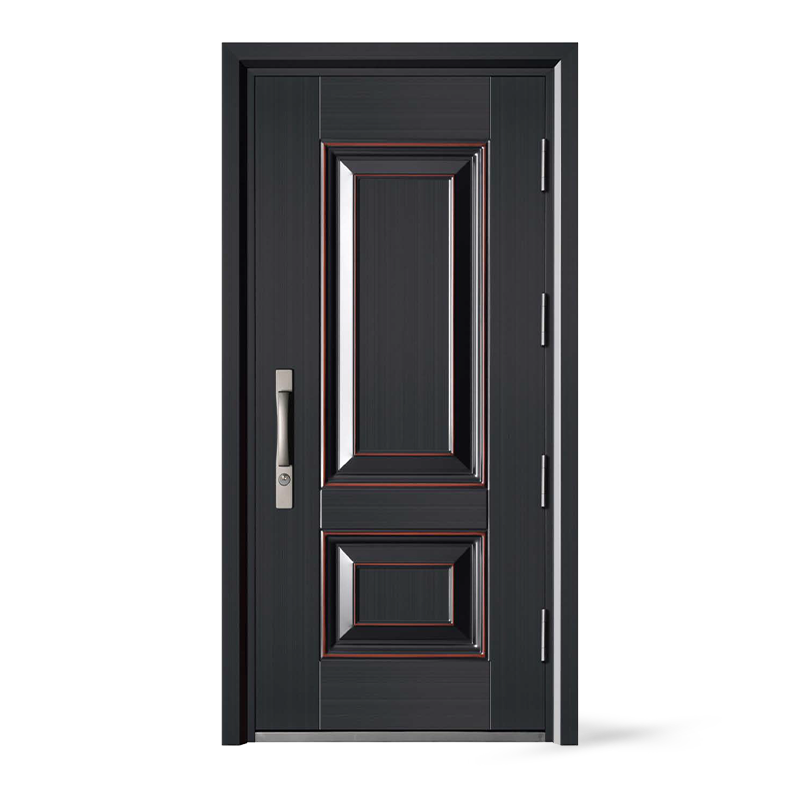
The copper color single opening UV resistant steel front door has a simple and elegant appearance design, a unique copper surface texture, and excellent decorative properties. It adopts advanced steel...
See Details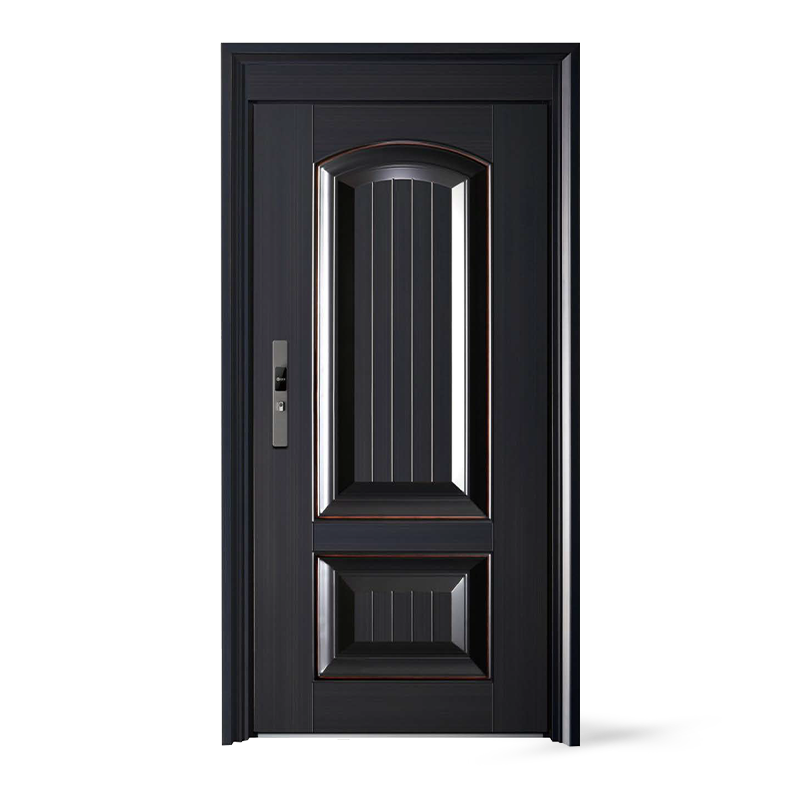
Metal steel single door security home main door is a high-quality door product designed for home security. It is made of high-quality steel, combined with modern technology and innovative design, perf...
See Details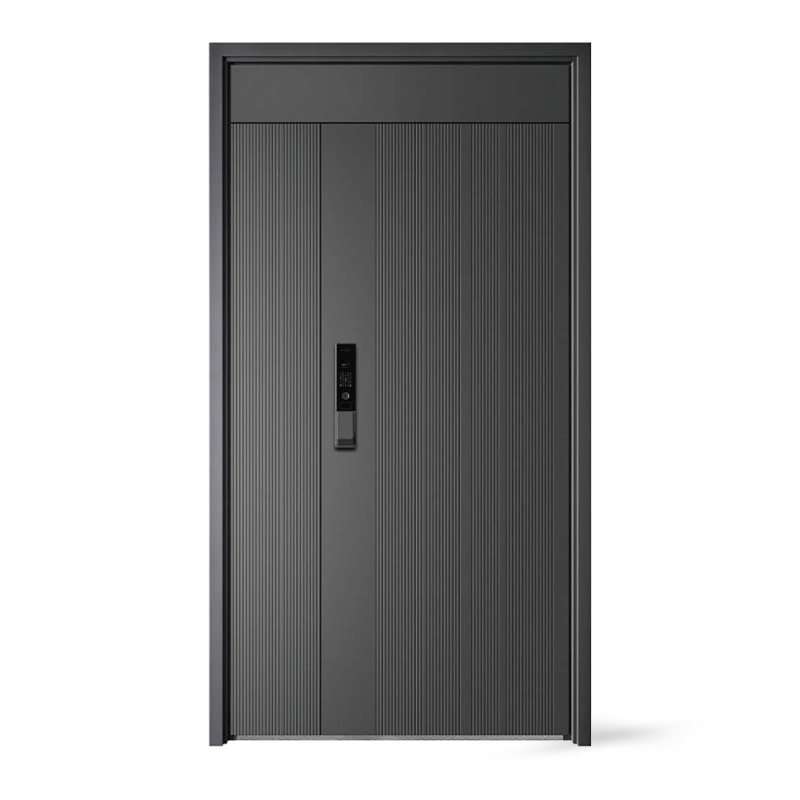
This double-layer steel fireproof and insulated front door is mainly composed of inner and outer double-layer steel plates, fireproof filling core material, inner frame reinforcement layer, heat insul...
See Details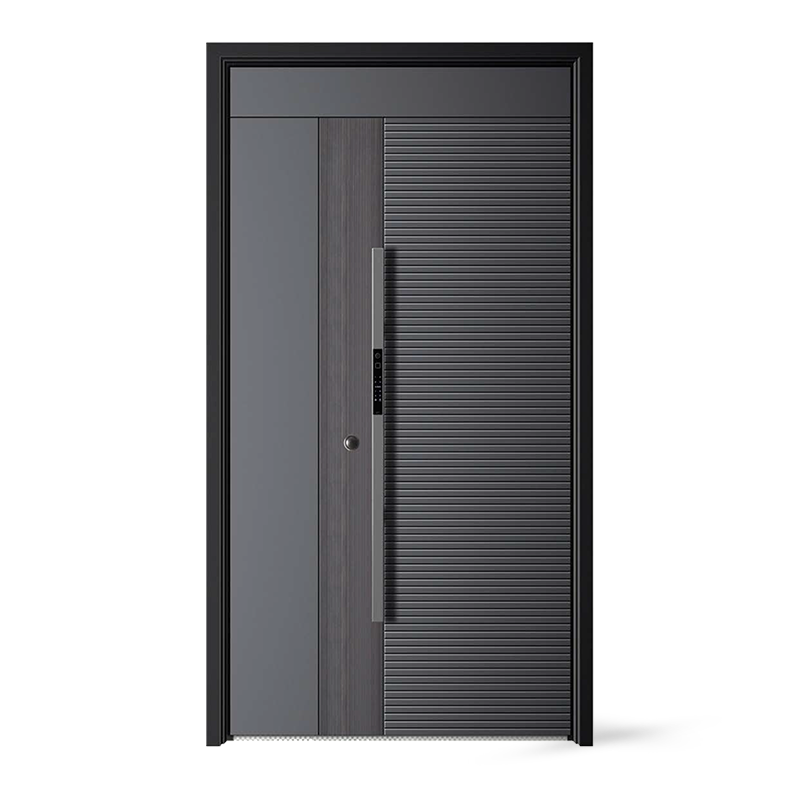
Grey design glass inset metal exterior steel front door is made of high-quality cold-rolled steel, which is precisely processed and treated to have extremely high strength and rigidity, and can effect...
See Details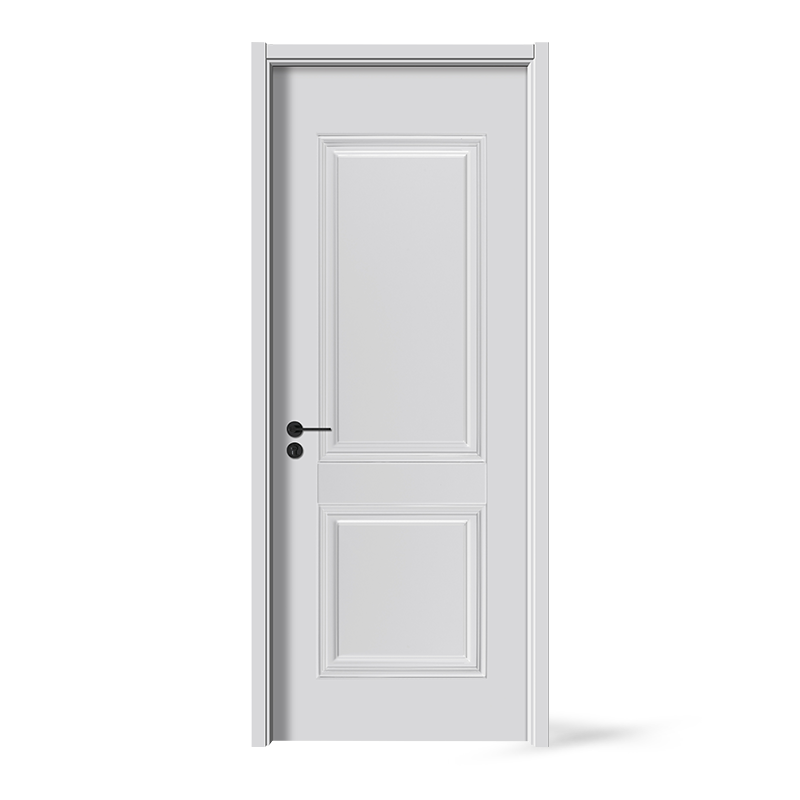
The core structure of PVC white painted teak board solid wood door is natural solid wood door core, and composite solid wood with good structural stability is selected as the basic skeleton. The solid...
See Details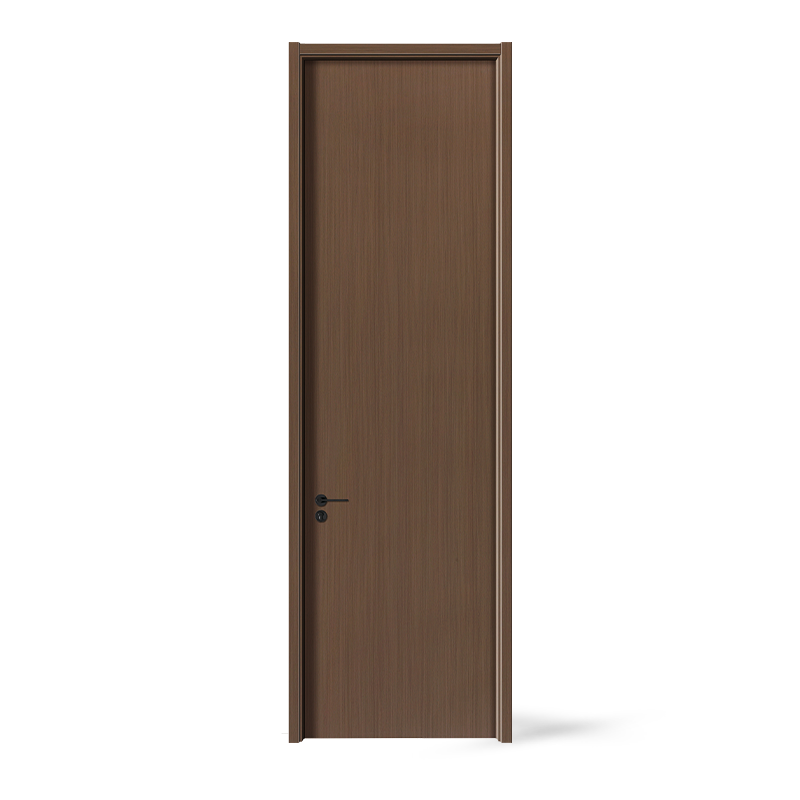
Black walnut veneer PVC interior solid wood door adopts multi-layer composite structure design. The core skeleton is generally composed of high-strength solid wood finger-jointed boards and fir integr...
See Details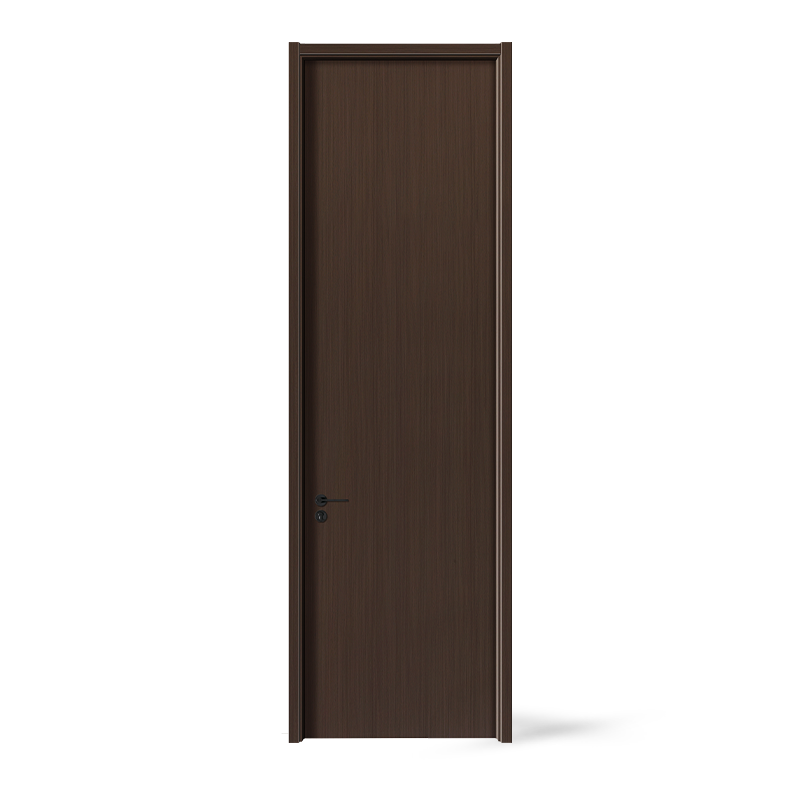
Indoor PVC wooden swing door is a high-quality door product that combines modern home design and practicality. It is widely used in various indoor spaces such as homes and offices. It uses PVC wood gr...
See Details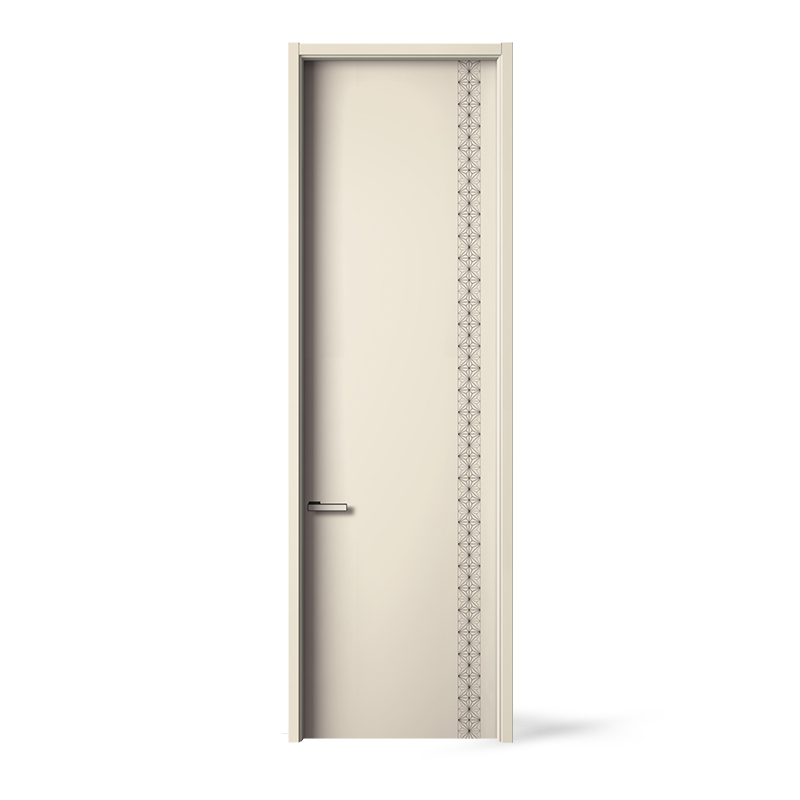
The core material of Xingyue White Waterproof Home Melamine Door uses strictly screened high-strength multi-layer solid wood boards as the base material. These base materials are made of high-quality ...
See Details1. Enhanced Durability and Weather Resistance of PVC Wood Doors PVC Wood Doors exhibit significantly enhanced durability and weather resistance when c...
READ MOREPVC Wood Doors' Innovative Materials: A Combination of Environmental Protection and Durability With the continuous evolution of modern home furnishing...
READ MOREIntroduction to Composite Wood Doors Composite wood doors have become a widely considered choice for homeowners and designers seeking alternatives to ...
READ MOREIn the world of home renovation and construction, the choice of doors is a critical decision that balances aesthetics, durability, and cost. While tra...
READ MORECopyright © Zhejiang Mingxuan Smart Home Co., Ltd. All Rights Reserved.