English
 中文简体
中文简体 Español
 عربى
عربى

Product Consultation
Your email address will not be published. Required fields are marked *

 EN
EN

Security is the number one reason people choose steel doors. But not all steel doors are equal. The level of protection depends on several factors: the gauge (thickness) of the steel, the core material, the locking system, and the frame construction.
Steel gauge matters: The thickness of the steel skin is measured in gauge – the lower the gauge number, the thicker the steel. For residential steel doors, the most common gauges are 24 (0.024 inches or 0.6mm), 22 (0.030 inches or 0.76mm), and 20 (0.036 inches or 0.9mm). A 20-gauge steel door is significantly more resistant to kicking and prying than a 24-gauge door. For commercial or high-security applications, 18-gauge (0.048 inches) or even 16-gauge (0.060 inches) is used. When you see a steel door advertised as “heavy-duty,” check the gauge – thicker steel provides real protection.
Core material impact: The core of a steel door is not just for insulation; it also adds structural strength. Polyurethane foam cores are the best, offering high density and excellent bonding to the steel skins. This creates a rigid, impact-resistant panel. Polystyrene foam cores are lighter and less expensive but provide less rigidity. Honeycomb cardboard cores are the least secure – they offer almost no resistance to forced entry. For security, always choose a door with a polyurethane foam core.
Lock reinforcement: A steel door is only as strong as its lock and deadbolt. Look for doors that come with a reinforced lock block – a solid metal plate or block inside the door at the lock location. Some doors have a full-length steel reinforcement plate behind the lock area. Additionally, the strike plate on the frame should be secured with 3-inch screws that penetrate into the wall studs. A high-security deadbolt (Grade 1 or Grade 2) is essential.
Frame strength: The door frame is equally important. A steel door installed in a flimsy wood frame can still be kicked in. The best solution is a steel door with a matching steel frame (often called a "steel door and frame" unit). Steel frames are welded or knocked-down and provide a continuous metal barrier. For retrofits into existing wood frames, use heavy-duty wood frames with reinforced strike plates.
A properly specified steel door can resist over 400 pounds of force applied to the lock area – far exceeding wood or fiberglass doors. Many insurance companies offer discounts for homes with steel entry doors due to the reduced risk of break-in.
Choosing the right door material involves trade-offs among security, aesthetics, insulation, maintenance, and cost. Here is a detailed comparison to help you decide.
Steel vs. Wood: Solid wood doors (mahogany, oak, fir) are beautiful and can be customized with intricate carvings. However, wood expands and contracts with humidity, leading to sticking, warping, or cracking. Wood doors require periodic sanding and refinishing (every 2-4 years) to protect against weather. They are also less secure – a determined intruder can kick through a wood door more easily than steel. Wood doors are significantly more expensive (often $1,500 to $5,000+) compared to steel doors ($300 to $1,500). Steel wins on security, durability, and cost, but wood wins on traditional aesthetics.
Steel vs. Fiberglass: Fiberglass doors are molded to look like wood grain and are resistant to dents and rust. They do not conduct heat as much as steel, so they can be slightly more energy efficient. However, fiberglass doors can fade or chalk in direct sunlight unless they have a high-quality UV-resistant gel coat. They are also more expensive than steel doors (typically $800 to $2,500). Steel doors are generally stronger against impact and forced entry. Fiberglass may be a good choice for coastal homes where salt spray could corrode steel (though galvanized steel with proper coating resists corrosion well). For most homeowners, steel offers better value.
Steel vs. Aluminum: Aluminum doors are lightweight and rustproof, but they are much weaker than steel. Aluminum dents easily and offers poor security. They are typically used for storm doors or commercial storefronts, not as primary entry doors. Steel is far superior for security.
Steel vs. Glass (French or patio doors): Glass doors are beautiful and let in light, but they are the least secure. Even tempered glass can be shattered. If security is a priority, choose a steel door with small glass lites (windows) or add security film. Better yet, use a solid steel door for the main entrance and keep glass doors for rear or garden access.
Verdict: For the best combination of security, durability, and cost, a steel door is the clear winner for most entry doors. Wood may be preferred for historic homes or interior doors, and fiberglass for coastal areas where salt corrosion is extreme. But for everyday security and low maintenance, steel is unmatched.
Steel doors come in various configurations to meet different needs. Understanding the types helps you select the right door for your application.
Residential steel entry doors: These are designed for homes and typically have a 24-gauge or 22-gauge steel skin, a polyurethane or polystyrene core, and a range of decorative options (panel styles, glass inserts, and finishes). They are pre-hung in a wood or steel frame and come with weatherstripping. Most residential steel doors are rated for energy efficiency and meet building codes for exterior doors.
Commercial steel doors: Heavier duty than residential, commercial steel doors use thicker steel (18 or 16 gauge) and are often installed in steel frames. They are common in office buildings, schools, hospitals, and industrial facilities. Many commercial steel doors are fire-rated (see below) and come with hardware prep for panic bars, closer arms, and heavy-duty hinges.
Fire-rated steel doors: These doors are tested and certified to resist fire for a specific duration – typically 20, 45, 60, or 90 minutes. They are required in commercial buildings and in some residential applications (e.g., garage entry doors in many codes). Fire-rated steel doors have a special core (mineral fiber or gypsum) that does not burn or transmit heat. They must be installed with matching fire-rated frames and hardware. Look for a label from UL or Warnock Hersey.
Flush steel doors: A simple flat surface without panels or decorative elements. These are common in utility rooms, closets, and commercial settings. They are the least expensive and easiest to paint.
Stile and rail steel doors: These mimic the look of traditional wood doors with raised or flat panels. They offer a more residential aesthetic while providing steel security.
Steel security doors (also called guard doors): These are essentially a steel screen or grille door mounted on the exterior of an existing door. They provide ventilation while keeping intruders out. They are often made of welded steel bars or expanded metal mesh. Popular in high-crime areas or for apartment buildings.
Dutch steel doors: A split door where the top and bottom halves can open independently. These are useful for farms, stables, or homes where you want to let in air while keeping pets or children inside. Steel Dutch doors are durable and secure.
One common misconception is that steel doors are cold or drafty. In reality, a quality insulated steel door can be highly energy efficient – often outperforming wood doors. The key is the core material and the weatherstripping.
Polyurethane foam core: This is the best insulator. Polyurethane has an R-value of approximately 5 to 7 per inch (R-5 to R-7). A standard 1¾-inch thick steel door with polyurethane core achieves an overall R-value of 6 to 8. This is comparable to a wood door of similar thickness. Some premium steel doors have a polyurethane core with added thermal breaks – a non-metallic strip between the interior and exterior steel skins – which further reduces heat transfer.
Polystyrene foam core: Polystyrene has a lower R-value (about 3.5 to 4 per inch). A door with this core may have an R-value of 4 to 5. It is still adequate for mild climates but less efficient than polyurethane.
Honeycomb cardboard core: This provides almost no insulation (R-value less than 1). These doors are only suitable for interior use or very mild climates. Avoid them for exterior entry doors.
Weatherstripping and threshold: Even the best-insulated door will leak energy if the weatherstripping is poor. Quality steel doors come with magnetic or vinyl bulb weatherstripping around the perimeter and a thermal break threshold with a sweep. Look for doors that meet ENERGY STAR requirements for your climate zone. Many steel doors now carry the NFRC (National Fenestration Rating Council) label with U-factor and Solar Heat Gain Coefficient ratings. A U-factor of 0.30 or lower is considered efficient.
Steel door thermal bridging: The steel skins themselves conduct heat, so without a thermal break, the door can have cold spots. Higher-end steel doors use a thermal break – a plastic or polyurethane separator between the inner and outer steel layers. This reduces heat transfer at the edges and around glass lites. For very cold climates, a thermal break is highly recommended.
In practice, a well-installed insulated steel door with good weatherstripping will be as comfortable as any wood or fiberglass door. Many homeowners report lower heating and cooling bills after replacing old wood doors with modern steel doors.
Gone are the days when steel doors were plain, gray, industrial eyesores. Today's steel doors come in a vast array of styles, finishes, and decorative options that can complement any architectural design – from colonial to contemporary.
Panel styles: Steel doors can be embossed with raised or recessed panels to mimic the look of classic wood doors. Common panel configurations include: 2-panel, 3-panel, 4-panel, 6-panel, and even 8-panel designs. You can choose smooth or wood-grain texture (some steel doors have a textured finish that simulates oak or fir grain).
Glass inserts (lites): Many steel doors include decorative glass panels, either single or double. Glass options include clear, frosted, seeded, beveled, stained, or leaded. The glass is usually insulated (double-pane, low-E) for energy efficiency. You can choose full lites (large glass area) or small lites near the top. For security, laminated or tempered glass is standard, and you can add security film.
Finishes and colors: Steel doors come primed (ready to paint) or pre-finished with a durable factory paint. Popular factory colors include white, almond, black, gray, bronze, and red. For custom colors, you can paint a primed door with high-quality exterior acrylic latex paint. Powder-coated finishes are available for commercial doors and offer exceptional durability.
Hardware: The right handle, deadbolt, and hinges can transform the look. Choose from satin nickel, brass, bronze, or black finishes. Modern steel doors can accommodate any standard lockset.
Sidelites and transoms: A steel door can be ordered as a unit with matching steel-framed sidelites (narrow windows on the sides) or transoms (windows above). This creates a grand entrance while maintaining the security of steel framing.
With the wide variety of options, you can find a steel door that looks like a traditional wood door, a modern minimalist slab, or anything in between. The notion that steel doors are ugly is outdated – they are now a design feature.
Installing a steel door is a project that many experienced DIYers can handle, but professional installation ensures proper alignment, weatherproofing, and security. Here are the critical steps and considerations.
Measuring the rough opening: The rough opening (the framed hole in the wall) must be square and level. Measure the width at top, middle, and bottom; height at left, center, and right; and diagonal lengths. The door unit (frame plus door) should be ½ to 1 inch smaller than the rough opening to allow for shimming and insulation. Standard sizes are 36 inches wide by 80 or 82 inches tall for single doors, and 60 or 72 inches wide for double doors.
Choosing between pre-hung and slab: A pre-hung steel door comes already assembled in its frame with hinges and weatherstripping. This is much easier to install correctly than a slab (door only) that requires you to mortise hinges and cut the lock hole. For most homeowners, pre-hung is the way to go.
Installation steps: Remove the old door and frame. Check the rough opening for rot or damage; repair as needed. Apply a bead of sealant (caulk) to the subfloor or threshold area. Set the new pre-hung unit into the opening, ensuring it is level and plumb. Use shims behind the hinge and strike sides to achieve a consistent gap (typically 1/8 inch). Secure the frame with screws long enough to reach the wall studs. Install insulation (expanding foam) in the gaps between frame and rough opening. Attach the door jamb covers (brickmold or casing) on the exterior and interior. Install the lockset and deadbolt according to the instructions. Finally, test the door operation – it should swing freely and latch without rubbing.
Common mistakes to avoid: Not using enough shims (door will rack and rub); over-tightening screws (warping the frame); failing to seal the threshold (water leaks); using short screws in the strike plate (reduced security); ignoring the need for a sweep or door bottom if there is a gap.
For steel doors with steel frames (commercial or high-security), the installation is more complex and usually requires welding or bolting the frame to the wall structure. Hire a professional for these.
One of the biggest advantages of a steel door is its low maintenance. Unlike wood, you do not need to sand, stain, or varnish. However, a few simple tasks will keep it looking and functioning like new for decades.
Cleaning: Wash the door twice a year with mild soap and water. Use a soft sponge or cloth; avoid abrasive pads that can scratch the paint. Rinse with clean water and dry with a soft cloth. For stubborn spots (bird droppings, tree sap), use a specialized automotive bug remover or isopropyl alcohol, then rinse.
Inspecting for rust: Although steel doors are galvanized and painted, scratches or chips can expose raw steel, which may rust over time, especially in humid or coastal environments. Inspect the bottom edge (where moisture collects) and around the lock area. If you find a rust spot, sand it lightly with fine-grit sandpaper, apply a rust-inhibiting primer, and touch up with matching paint.
Lubricating hinges and locks: Use a silicone-based lubricant or light machine oil on hinges, lock cylinders, and deadbolt mechanisms once a year. Avoid WD-40 (it attracts dust). Wipe away excess.
Checking weatherstripping: The rubber or vinyl weatherstripping can become brittle or crack over time. Replace it when you notice drafts or light visible around the door edges. Most manufacturers sell replacement weatherstripping kits.
Repainting: If the factory finish fades or gets scratched, you can repaint a steel door. Lightly sand the entire door with 220-grit sandpaper to create a key. Clean off dust. Apply a high-quality exterior primer formulated for metal, then two coats of acrylic latex exterior paint. Do not use oil-based paint over a previously painted latex surface without proper primer. For pre-finished steel doors, you may need to use a bonding primer first.
Dent repair: Steel doors can dent if hit hard (e.g., by a lawnmower or a heavy object). Small dents can sometimes be filled with automotive body filler (Bondo), sanded smooth, and repainted. Large dents may require door replacement. To prevent dents, consider installing a kick plate on the lower part of the door.
With proper care, a quality steel door will easily last 30 years or more – often the life of the home.
The price of a steel door varies widely based on gauge, core, design, glass, and whether it includes a frame. Here is a general price guide (excluding installation).
Economy (24-gauge steel, polystyrene core, flush or simple panel design): $150 to $350 for a pre-hung unit. These are suitable for mild climates, utility rooms, or back doors where security is less critical. However, they dent easily and provide less insulation.
Mid-range (22-gauge steel, polyurethane core, decorative panels, primed or basic factory finish): $400 to $800. This is the sweet spot for most homes. Good security, good insulation, and attractive designs. Most include weatherstripping and a threshold.
Premium (20-gauge steel, thermal break, high-density polyurethane core, wood-grain texture, decorative glass, prefinished with high-quality paint): $900 to $1,500. These offer excellent security, energy efficiency, and curb appeal. Many carry ENERGY STAR ratings and come with lifetime warranties.
Commercial or fire-rated (16- or 18-gauge, mineral core, steel frame): $1,000 to $3,000+ depending on size and fire rating. Installation by a commercial door company adds significant cost.
Installation labor typically adds $200 to $500 for a residential pre-hung door, depending on complexity and local rates. Replacing a door in a non-standard opening or retrofitting into an old frame may cost more.
While a premium steel door costs more upfront, it often pays for itself in energy savings and reduced maintenance compared to wood doors. Additionally, a solid steel door can increase your home's resale value and may lower insurance premiums.
Even the best steel doors can experience issues over time. Here are the most common problems and how to fix them.
Problem: The door sticks or rubs against the frame. This is usually due to house settling, warped frame, or loose hinges. First, tighten the hinge screws. If that doesn't work, plane the door edge (difficult on steel – instead, adjust the strike plate). For minor rubbing, you can bend the hinge knuckles slightly with a hammer and pry bar (a technique called "shaving the hinge"). For severe misalignment, you may need to remove the door and re-shim the frame.
Problem: The door has condensation or frost on the inside. This indicates poor insulation or a thermal bridge. If the door core is honeycomb or low-density, consider upgrading to a polyurethane core door. If the door is otherwise good, check the weatherstripping and threshold for air leaks. Adding a door sweep or a magnetic seal can help.
Problem: The door sweats (exterior condensation) on hot, humid days. This is normal for metal doors – the steel surface is cooler than the dew point. It does not indicate a problem. Ensure the door is properly primed and painted to prevent rust. Wipe off condensation as needed.
Problem: The lock is hard to turn or the deadbolt does not line up. This is often caused by the door sagging. Adjust the hinges as above. If the strike plate is misaligned, remove it and enlarge the hole with a metal file or Dremel tool, then reinstall.
Problem: Rust bubbles under the paint. This means moisture has penetrated the coating. Sand the affected area down to bare metal, treat with a rust converter, apply primer, and repaint. If rust is widespread, consider replacing the door.
Problem: The steel door is dented. For small dents, use an auto body dent puller or fill with Bondo. For large dents, replacement is usually more cost-effective than repair. To prevent future dents, install a protective kick plate.
Steel is one of the most sustainable building materials available. Steel doors are typically made from recycled steel (often 25-30% recycled content) and are 100% recyclable at the end of their long life. In contrast, wood doors may come from non-sustainable forests, and fiberglass doors are not easily recyclable. Additionally, the energy efficiency of a well-insulated steel door reduces heating and cooling energy consumption, lowering the home's carbon footprint. Choosing a steel door with a polyurethane core made with water-blown (not CFC) foam further reduces environmental impact. Many manufacturers now offer doors with low-VOC paints and adhesives.
For the eco-conscious homeowner, a durable steel door that lasts 30+ years means fewer replacements and less waste sent to landfills. Steel is also non-toxic and does not off-gas harmful chemicals like some composite materials.
Are steel doors more secure than wood doors? Yes, steel doors are significantly more secure than hollow-core or solid wood doors. A 20-gauge or 22-gauge steel skin backed by a rigid polyurethane core resists kicking, prying, and drilling. For maximum security, choose a steel door with a reinforced lock block, a steel frame, and Grade 1 deadbolts.
Can a steel door be painted any color? Yes, if the door is primed or the existing paint is in good condition. Use a high-quality exterior latex or acrylic paint designed for metal. For pre-finished factory-painted doors, you may need to lightly sand and prime before repainting. Avoid dark colors in hot climates as they can cause the steel to heat up and potentially warp the door (though modern doors have thermal breaks to mitigate this).
Do steel doors rust? Galvanized steel doors are coated with a layer of zinc that resists rust. The factory primer and paint add additional protection. However, if the paint is scratched down to bare steel and moisture is present, rust can form. Regular inspection and touch-up painting prevent this. In coastal areas with salt spray, consider a steel door with an extra-thick powder coating or a fiberglass door instead.
How long do steel doors last? A quality steel door, properly maintained, can last 30 to 50 years or more. The main wear points are the paint finish and the weatherstripping, both of which can be renewed. The steel structure itself is extremely durable.
Are steel doors energy efficient? Yes, when equipped with a polyurethane foam core and good weatherstripping, a steel door can achieve R-values of 6 to 8, comparable to wood or fiberglass. Look for doors with a thermal break and ENERGY STAR certification for your climate zone.
Can a steel door be installed in an existing wood frame? Yes, you can buy a steel door slab (without frame) and hang it on your existing wood frame, provided the frame is sound, square, and the hinges align. However, it is easier and more secure to purchase a pre-hung steel door with its own frame. The new frame can be installed inside the old rough opening after removing the old frame.
What is the difference between a steel door and a security door? A steel door is a solid slab door made of steel. A security door (often called a guard door or storm door) is an additional screen or grille door installed on the exterior of the primary door. Both can be steel, but a security door typically has open mesh or bars to allow ventilation while preventing entry.
Do steel doors dent easily? Thin-gauge steel (24 gauge) dents relatively easily from impacts like a kicked soccer ball or a lawnmower thrown rock. Thicker steel (20 or 18 gauge) is much more resistant to dents. For areas prone to impacts, choose a thicker gauge or add a protective kick plate.
Can you add a dog door to a steel door? Yes, but you will need a special metal-cutting tool (jigsaw with metal blade or a nibbler) to cut the opening. Install a pet door designed for metal doors – they come with a frame that seals the cut edge to prevent rust. Alternatively, install the pet door in the wall next to the steel door to avoid compromising the door's security and insulation.
Are steel doors soundproof? Steel doors are decent at blocking sound, especially when filled with dense polyurethane foam. They perform better than hollow wood doors but are not as soundproof as solid wood or acoustic-rated doors. For sound-sensitive rooms, add weatherstripping and an automatic door bottom seal to block sound leaks.
What is the standard size of a steel door? The most common residential steel door size is 36 inches wide by 80 inches tall (nominal). Other common widths: 30, 32, and 34 inches. Double doors are often 60 or 72 inches wide. Commercial doors may be 36x84 or 36x96 inches.
Can a steel door be used as an interior door? Yes, steel doors are used for interior applications where fire rating, sound control, or durability is needed – such as between a garage and living area (fire code), in workshops, or in high-traffic commercial interiors. Interior steel doors are typically lighter gauge and have a honeycomb core because insulation is less important.
How do I remove a dent from a steel door? For small dents (less than 1 inch diameter), you can use a dent puller kit (suction cup or glue-pull method). For larger dents, fill with auto body filler. Sand, prime, and repaint. If the dent has creased the steel, replacement is usually easier.
Do steel doors come with warranties? Yes, reputable manufacturers offer warranties ranging from 1 year to lifetime on the door panel (against defects). The paint finish may have a shorter warranty (e.g., 5-10 years). Read the fine print – some warranties exclude rust from scratches or damage caused by improper installation.
Can I use a smart lock on a steel door? Absolutely. Steel doors are compatible with any standard lockset, including smart locks (Wi-Fi, Bluetooth, keypad, or fingerprint). Ensure the door has proper reinforcement for the deadbolt (at least a 1-inch throw and a reinforced strike plate). Some smart locks come with their own reinforced strike plates.
What is the R-value of a steel door? R-value varies by core: polyurethane foam core doors typically have R-6 to R-8; polystyrene core doors R-4 to R-5; honeycomb core doors R-1 to R-2. The door assembly also includes the frame and weatherstripping, which affect overall energy performance.
Are steel doors more expensive than fiberglass? Generally, steel doors are less expensive than fiberglass doors of comparable quality. Basic steel doors start around $150, while basic fiberglass doors start around $400. Premium steel doors ($900-$1,500) are similar in price to mid-range fiberglass. However, steel offers better security for the price.
Can a steel door be trimmed to fit a smaller opening? Trimming a steel door is not recommended because cutting the steel skin exposes the core and may void the warranty. The frame can be shimmed, and the rough opening can be adjusted with lumber. If the opening is too small, you should order a door to the correct size.
What is a "thermal break" in a steel door? A thermal break is a non-metallic spacer (usually polyurethane or plastic) inserted between the interior and exterior steel skins. It prevents heat from conducting directly through the steel, reducing condensation and improving energy efficiency. Premium steel doors often feature a thermal break.
Final recommendation: For homeowners and business owners who value security, durability, and value, a steel door is an outstanding choice. Select a door with 20- or 22-gauge steel, a polyurethane foam core, a reinforced lock block, and quality weatherstripping. Pair it with a Grade 1 deadbolt and a steel or reinforced wood frame. With minimal maintenance, your steel door will protect your property and look great for decades. Whether you choose a classic panel design or a modern flush style, steel gives you peace of mind that no other material can match.
Your email address will not be published. Required fields are marked *
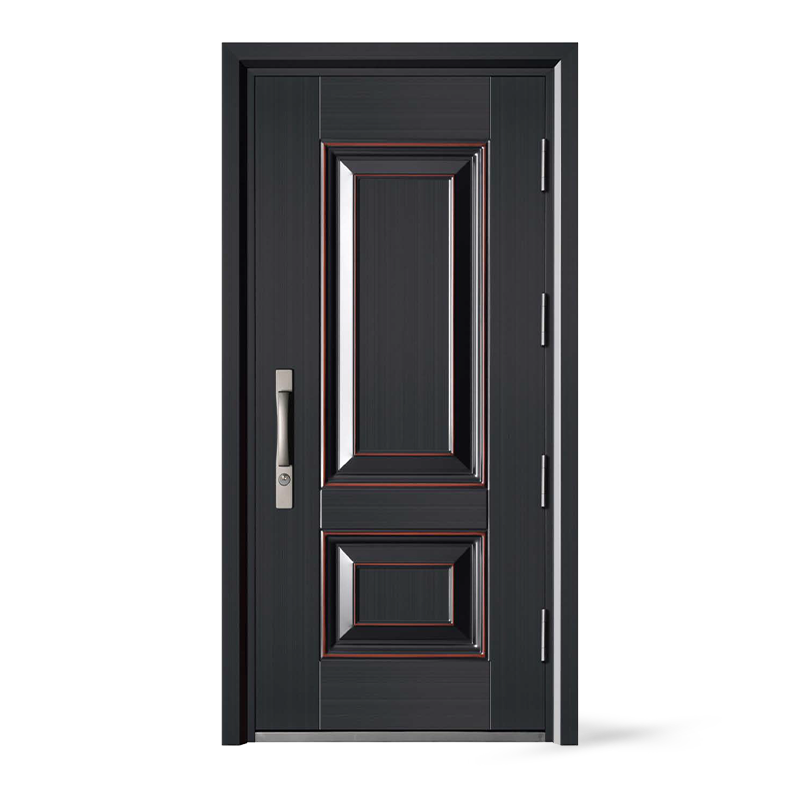
The copper color single opening UV resistant steel front door has a simple and elegant appearance design, a unique copper surface texture, and excellent decorative properties. It adopts advanced steel...
See Details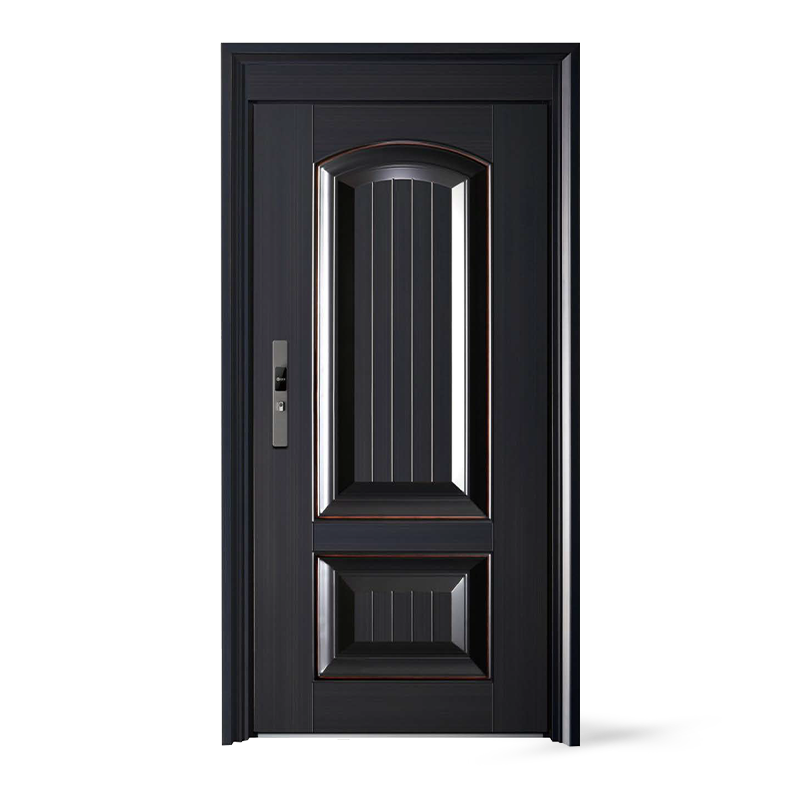
Metal steel single door security home main door is a high-quality door product designed for home security. It is made of high-quality steel, combined with modern technology and innovative design, perf...
See Details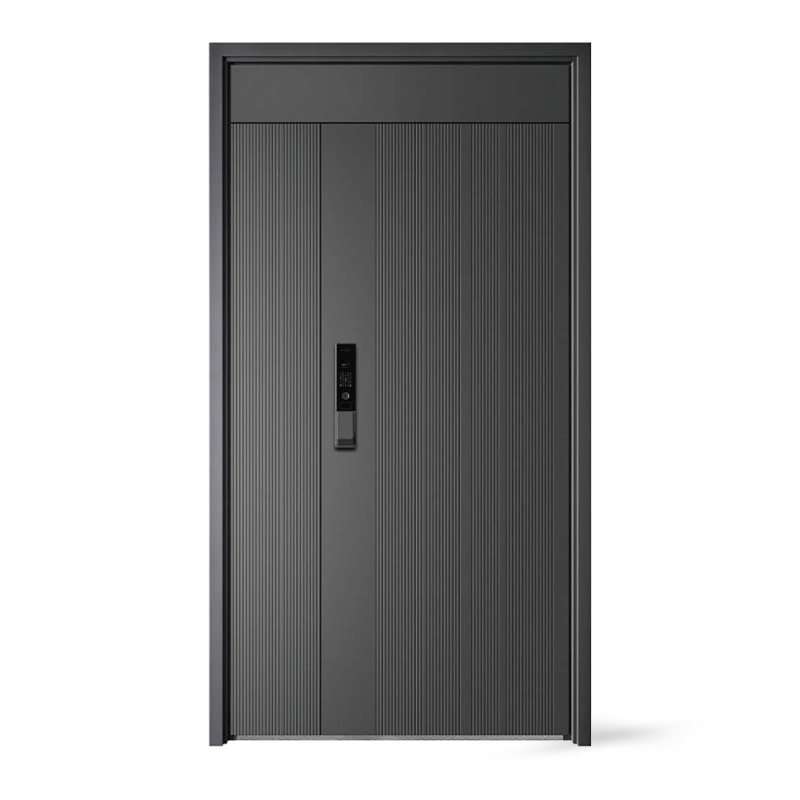
This double-layer steel fireproof and insulated front door is mainly composed of inner and outer double-layer steel plates, fireproof filling core material, inner frame reinforcement layer, heat insul...
See Details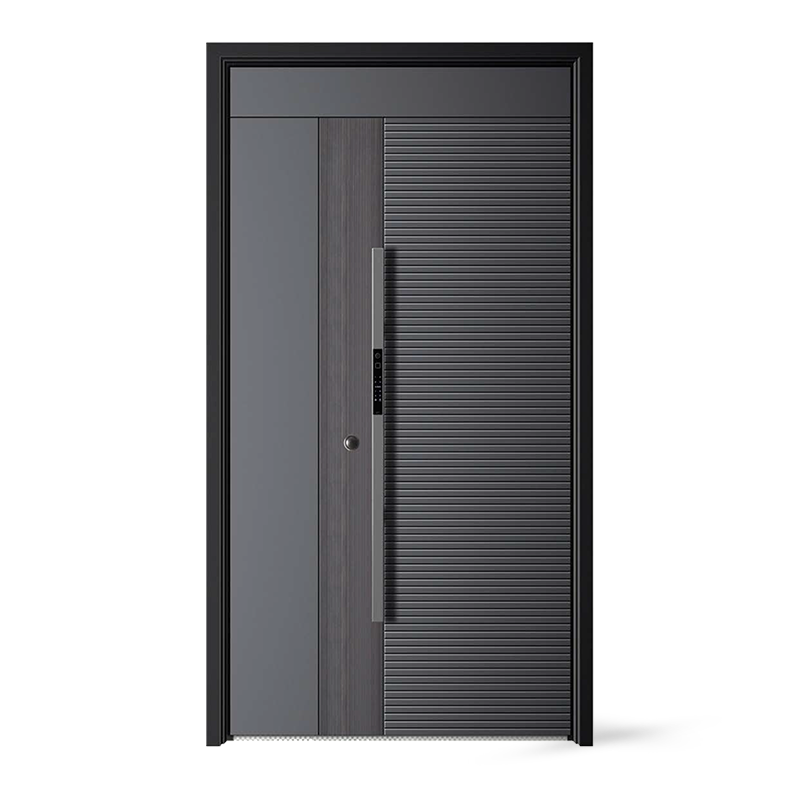
Grey design glass inset metal exterior steel front door is made of high-quality cold-rolled steel, which is precisely processed and treated to have extremely high strength and rigidity, and can effect...
See Details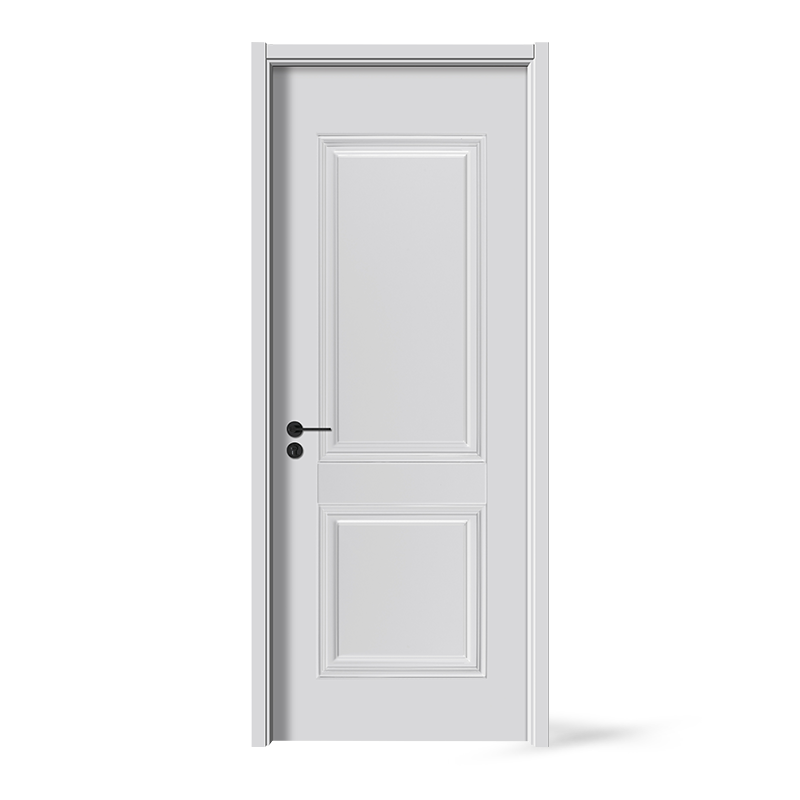
The core structure of PVC white painted teak board solid wood door is natural solid wood door core, and composite solid wood with good structural stability is selected as the basic skeleton. The solid...
See Details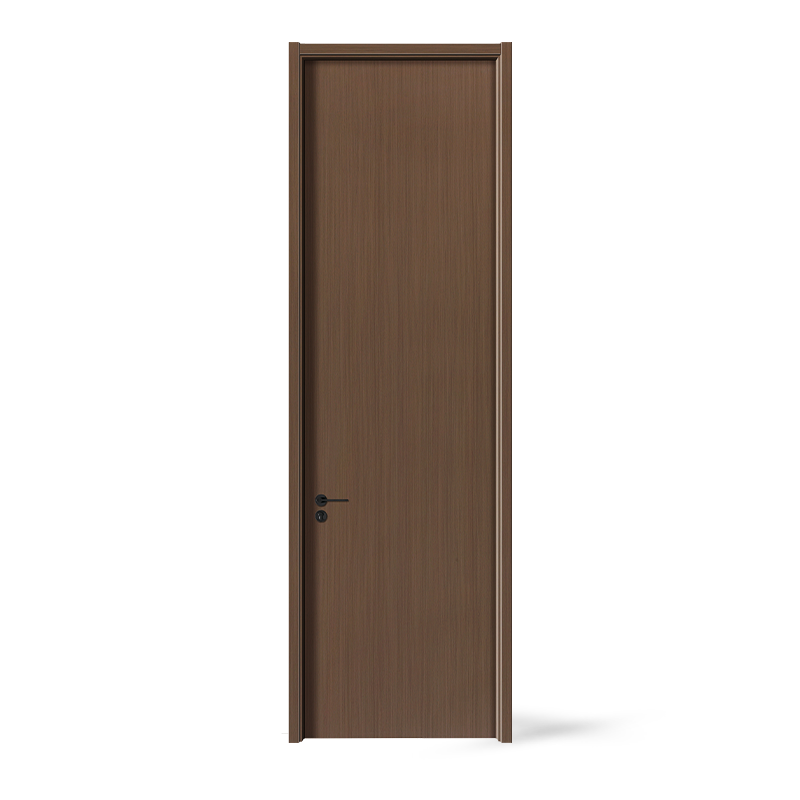
Black walnut veneer PVC interior solid wood door adopts multi-layer composite structure design. The core skeleton is generally composed of high-strength solid wood finger-jointed boards and fir integr...
See Details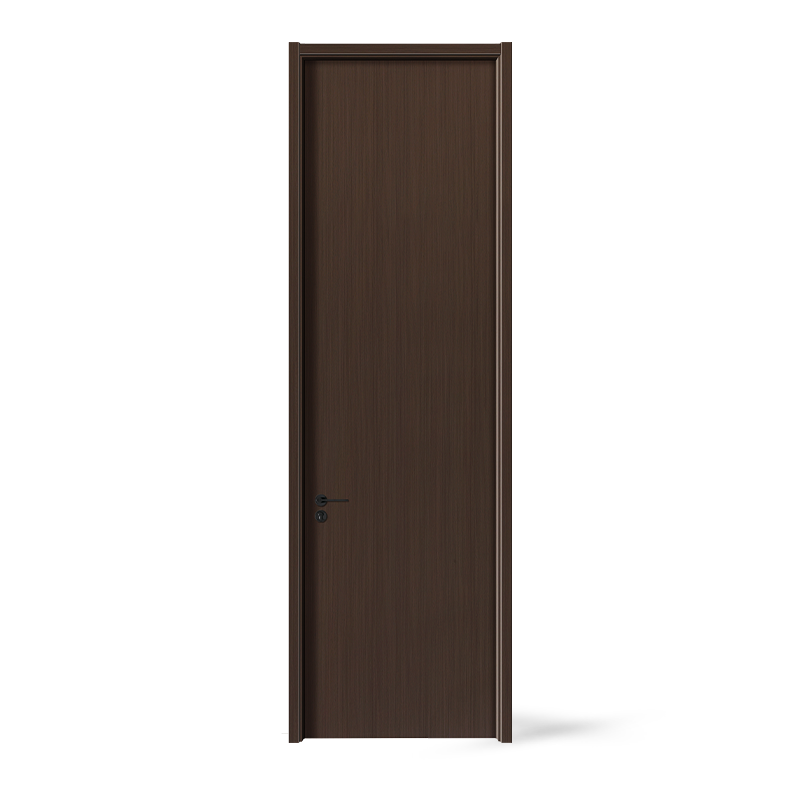
Indoor PVC wooden swing door is a high-quality door product that combines modern home design and practicality. It is widely used in various indoor spaces such as homes and offices. It uses PVC wood gr...
See Details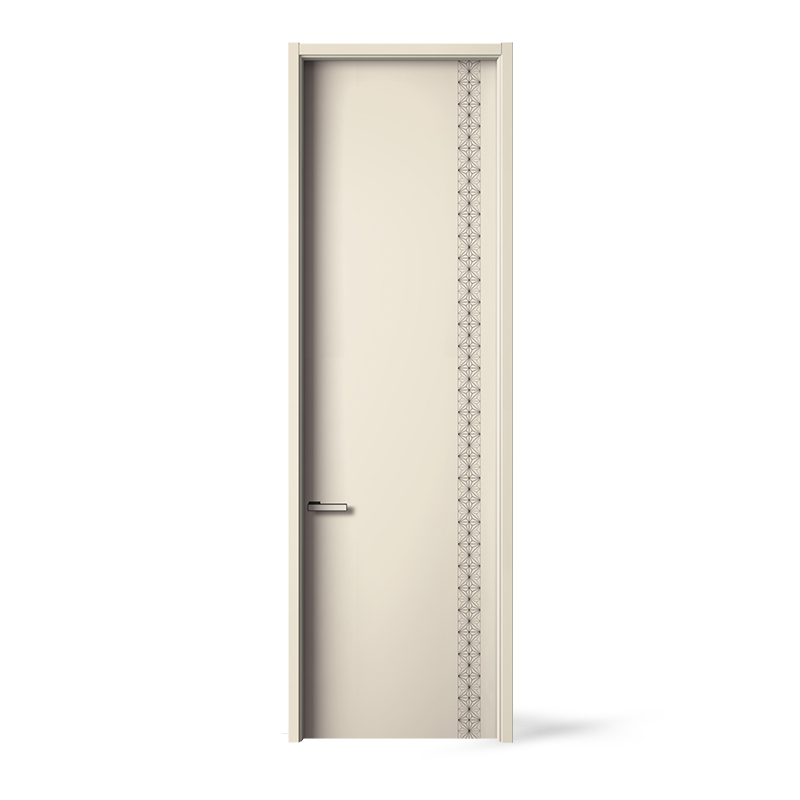
The core material of Xingyue White Waterproof Home Melamine Door uses strictly screened high-strength multi-layer solid wood boards as the base material. These base materials are made of high-quality ...
See Details1. Enhanced Durability and Weather Resistance of PVC Wood Doors PVC Wood Doors exhibit significantly enhanced durability and weather resistance when c...
READ MOREPVC Wood Doors' Innovative Materials: A Combination of Environmental Protection and Durability With the continuous evolution of modern home furnishing...
READ MOREIntroduction to Composite Wood Doors Composite wood doors have become a widely considered choice for homeowners and designers seeking alternatives to ...
READ MOREIn the world of home renovation and construction, the choice of doors is a critical decision that balances aesthetics, durability, and cost. While tra...
READ MORECopyright © Zhejiang Mingxuan Smart Home Co., Ltd. All Rights Reserved.